

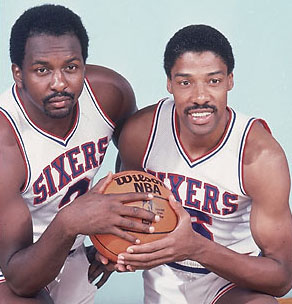
The Philadelphia 76ers are one of the NBA’s oldest and most successful franchises. Founded in 1946 as the Syracuse Nationals, the organization has won three NBA championships, produced numerous Hall of Fame players, and helped shape professional basketball through innovations that changed the game forever.
The Syracuse Nationals (1946–1963)
The franchise began on November 14, 1946, when businessman Danny Biasone founded the Syracuse Nationals as a member of the National Basketball League (NBL). Three years later, the Nationals became one of the founding members of the NBA when the NBL merged with the Basketball Association of America in 1949.
Under Hall of Famer Dolph Schayes, Syracuse quickly became one of the league’s premier teams. The Nationals reached the NBA Finals in 1950 and 1954 before capturing their first championship in 1955 by defeating the Fort Wayne Pistons in a dramatic seven-game series.
Perhaps the franchise’s greatest contribution to basketball came during this era. Owner Danny Biasone and general manager Leo Ferris developed the 24-second shot clock, which was introduced for the 1954–55 season. The innovation revolutionized professional basketball by eliminating stalling tactics and creating the fast-paced game fans enjoy today.
A New Home in Philadelphia
Financial challenges and Syracuse’s small-market limitations eventually led to the sale of the franchise. In 1963, Irv Kosloff and Ike Richman purchased the Nationals and relocated the team to Philadelphia after the Warriors had moved to San Francisco the previous year. Following a fan contest, the club adopted the name “76ers,” honoring the signing of the Declaration of Independence in Philadelphia in 1776.
Wilt Chamberlain and the Greatest Team Ever?
The arrival of Wilt Chamberlain transformed the franchise into an NBA powerhouse. Alongside Hal Greer, Billy Cunningham, Chet Walker, Wali Jones, and coach Alex Hannum, the 1966–67 76ers compiled a remarkable 68–13 record.
Philadelphia defeated the Boston Celtics in the Eastern Division Finals, ending Boston’s streak of eight consecutive championships before defeating the San Francisco Warriors in the NBA Finals. Many historians still consider the 1967 76ers among the greatest teams in NBA history.
Transition Years
Following Chamberlain’s departure in 1968, the franchise remained competitive behind Billy Cunningham but entered a rebuilding period during the early 1970s. One bright spot came in 1973, although not for the right reasons. The Sixers finished 9–73, still one of the worst records in NBA history.
The Dr. J Era
Everything changed when Julius Erving arrived from the ABA in 1976.
“Dr. J” became the face of the franchise and one of basketball’s biggest stars. His athleticism, creativity, and leadership made Philadelphia an annual championship contender.
The Sixers reached the NBA Finals in 1977, 1980, and 1982 but fell short each time.
The 1983 Championship
Philadelphia finally broke through after acquiring Moses Malone before the 1982–83 season.
With Erving, Malone, Maurice Cheeks, Andrew Toney, Bobby Jones, and coach Billy Cunningham, the Sixers dominated the league. Malone famously predicted “Fo’, Fo’, Fo'” before the playoffs, expecting a perfect postseason run.
While Philadelphia finished 12–1 instead of 12–0, they defeated the Los Angeles Lakers in four games to capture the franchise’s third NBA championship. Malone earned league MVP and Finals MVP honors during one of the greatest individual seasons in NBA history.
Charles Barkley and the 1990s
Following the championship years, Charles Barkley emerged as the team’s next superstar. One of the NBA’s most dominant power forwards, Barkley won multiple All-Star selections in Philadelphia before being traded to Phoenix in 1992.
The franchise struggled throughout much of the decade until winning the 1996 NBA Draft Lottery.
Allen Iverson Changes Everything
With the first overall pick in 1996, Philadelphia selected Allen Iverson from Georgetown.
Iverson immediately electrified the league with his fearless style of play, dazzling ball handling, and relentless scoring ability. He won Rookie of the Year and eventually became the face of the NBA.
In 2001, Iverson won the league MVP award while leading the Sixers to the NBA Finals. Philadelphia defeated Indiana, Toronto, and Milwaukee before facing the heavily favored Los Angeles Lakers.
Although the Lakers won the series in five games, Iverson’s unforgettable 48-point performance in Game 1 remains one of the greatest Finals performances ever.
The Process
Following years of mediocrity, general manager Sam Hinkie began a dramatic rebuilding effort in 2013 that became known simply as “The Process.”
The strategy focused on accumulating draft picks and accepting short-term losses in pursuit of long-term championship contention.
While controversial, the rebuild eventually produced franchise cornerstone Joel Embiid and helped reshape modern NBA team-building philosophy.
The Joel Embiid Era
Joel Embiid developed into one of the NBA’s dominant centers, winning the league MVP award in 2023 and becoming the centerpiece of multiple playoff teams.
Alongside players such as Ben Simmons, Jimmy Butler, James Harden, Tyrese Maxey, and later new additions, the Sixers consistently remained among the Eastern Conference contenders. Despite regular-season success, however, deep playoff runs proved elusive.
Franchise Legacy
From the Syracuse Nationals to today’s Philadelphia 76ers, the organization has remained one of basketball’s most respected franchises.
The franchise has produced legends including Dolph Schayes, Wilt Chamberlain, Julius Erving, Moses Malone, Charles Barkley, Allen Iverson, and Joel Embiid. It introduced the 24-second shot clock, won championships in three different eras, and remains one of the NBA’s historic “Original Eight” franchises that survived the league’s earliest years.
More than seventy-five years after its founding, the 76ers continue to represent one of professional basketball’s richest traditions, connecting the legacy of the Syracuse Nationals with one of America’s great basketball cities.